
Words shape how we understand behavior. They also shape how we work together to improve it.
As behavioral insights become more deeply embedded in public health, professionals from multiple disciplines are increasingly collaborating to address complex challenges. But they are not always speaking the same language.
A behavioral intervention. A nudge. An enabling environment. Social norms.
These and other terms can carry different meanings depending on a person’s discipline or area of expertise, making it harder to compare evidence, design programs and translate research into practice.
A new Behavioural Insights Glossary for Public Health Practitioners from the World Health Organization aims to help address that challenge. Developed through an international collaborative process, the glossary provides shared definitions for 33 foundational concepts used across behavioral insights and public health.
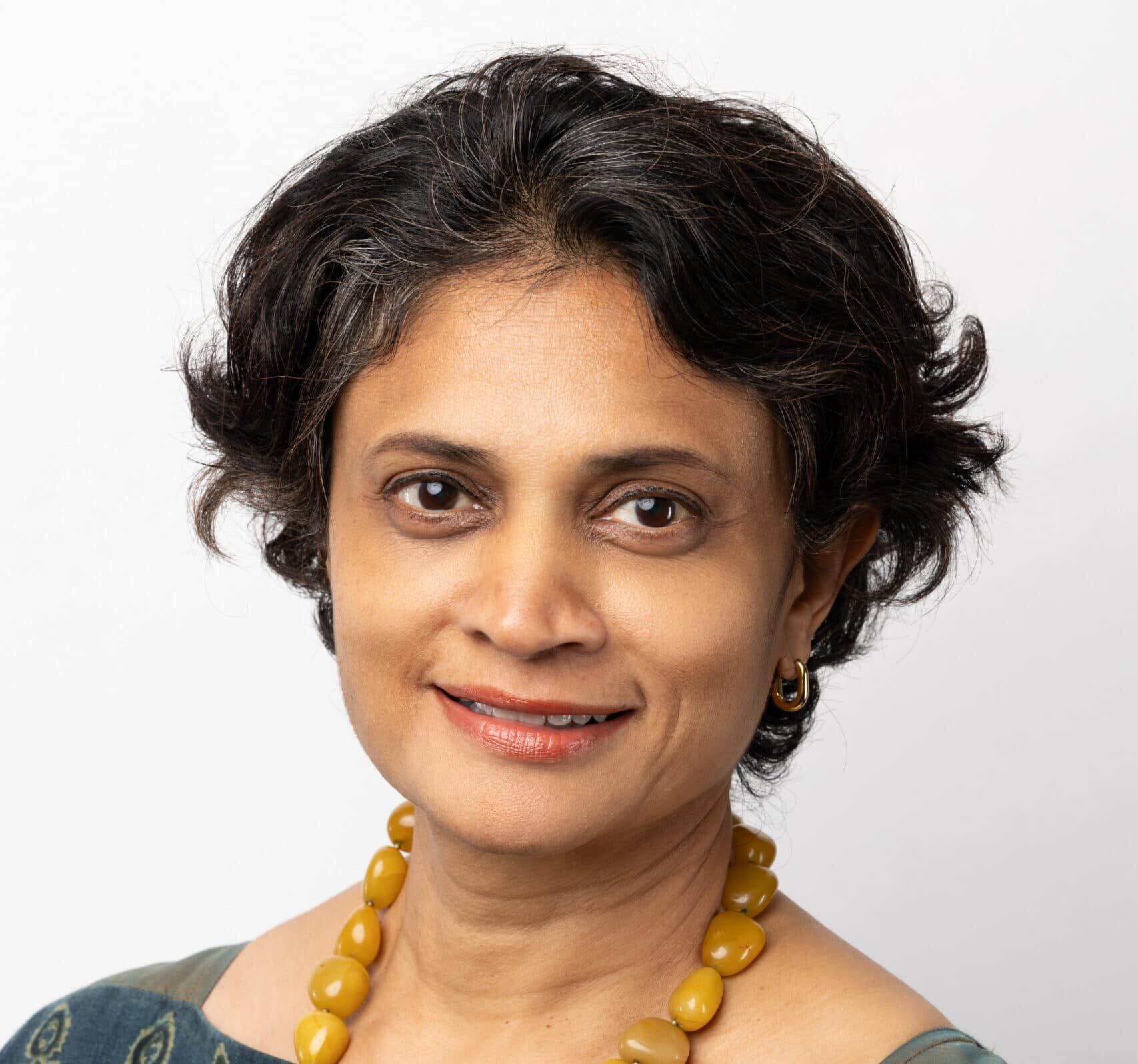
Among those who helped shape the resource is Uttara Bharath Kumar, senior technical advisor at the Johns Hopkins Center for Communication Programs (CCP) and a member of WHO’s Technical Advisory Group on Behavioural Insights for Better Health comprises of 16 global experts in the field.
The need for a shared vocabulary became clear even among the experts working on the glossary.
“As we started talking about how we integrate behavioral science concepts into work at the country level, we discovered that even within our group there were so many differences in the way people saw or defined terminology that was frequently used in our world,” Bharath Kumar said.
The goal was not to dictate how people should use language, she said, but to create a foundation for clearer communication.
“Having a glossary to refer back to gives us a common starting point,” she said. “We all may still not agree but it allows people to say, ‘WHO defines it this way, but this is how we are interpreting it.’”
The glossary was developed by WHO in partnership with University College London through a collaborative process that brought together experts from around the world, WHO staff across all six regions and public health practitioners to identify and clarify the terms most important to the field.
Each of the 33 entries includes a definition, an explanation of how the term is used in public health practice and links to related concepts. The resource covers topics ranging from behavioral diagnosis and choice architecture to social norms, theory of change and enabling environments.
For Bharath Kumar, the process itself was a reminder of why language matters.
“What surprised me was how much discussion there was,” she said. “There were terms I thought would be no-brainers, and we didn’t agree.”
The debate, she said, was a valuable part of the process, forcing experts to examine how they understood terms and how those definitions shaped their work.
“I learned a lot from the debates and discussions we had,” she said. “It made me critically assess how I felt about a term and how I had experienced it in my work.”
The conversations also reflected a broader evolution in the field. Behavioral economics, human-centered design, behavioral science and social and behavior change have often developed from different traditions, but they increasingly overlap in public health practice.
“People come at it from different angles,” Bharath Kumar said. “But thinking of it more as a science rather than a ‘soft skill,’ a box where many people have placed it, gives it the importance it deserves.”
That perspective resonates at CCP, where programs have long drawn on social and behavioral science, communication and community engagement to improve health outcomes around the world. Whether addressing vaccine confidence, family planning, malaria prevention or humanitarian response, understanding what influences behavior requires looking beyond the individual to the broader social, cultural and structural context.
As behavioral science and social and behavior change continue to evolve, Bharath Kumar said, developing a common language will be essential to strengthening the field and helping practitioners, researchers and policymakers work together more effectively.
“Medical science has terminology that is understood widely,” she said. “So why not behavioral science?”