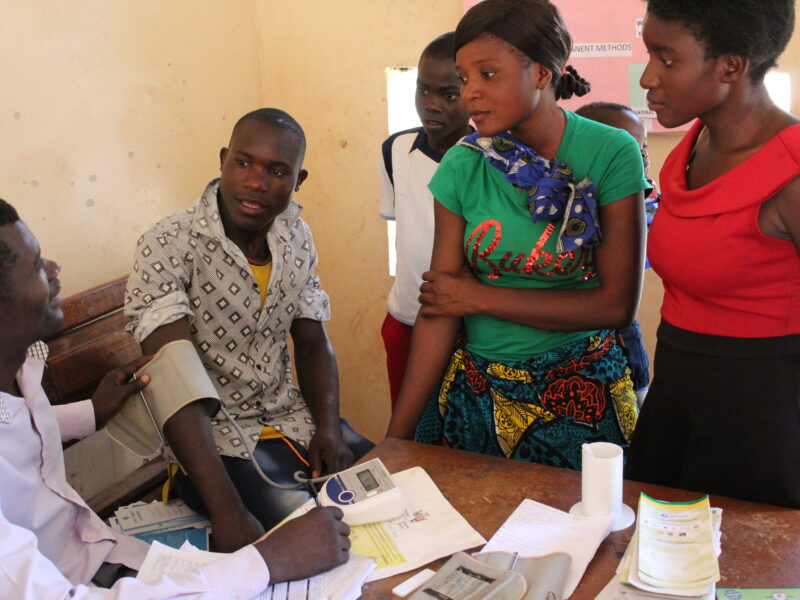

In Ethiopia, many young people hesitate to seek sexual and reproductive health (SRH) services due to fear of judgment, stigma, or denial – primarily based on their age or marital status.
At the same time, service providers often face their own barriers: personal beliefs, social norms, and professional constraints that can lead to incomplete counselling or even refusal of services.
To address this gap, the WISH 2 project, led by the International Planned Parenthood Federation and including the Johns Hopkins Center for Communication Programs, introduced Empathways, a transformative tool designed to help providers and young clients build mutual understanding and trust.
A three-day training workshop was held in August with service providers and youth participants from Tigray, Amhara, and Afar regions.
The Empathways tool, adapted to Ethiopia from a version created by CCP under its Breakthrough ACTION project, was used to guide participants through a series of interactive sessions that encouraged deep reflection on their values, biases and the social norms that shape provider–client interactions.
The card activity takes youth and their family planning service providers on a dynamic, engaging journey from awareness to empathy to action. The objective is to forge greater empathy between these groups, and then for providers to apply this empathy to improve youth family planning service delivery.
“Providers are shaped by the same social norms as everyone else,” says Esete Getachew, CCP’s senior social and behavior change advisor for Ethiopia. “Through empathy and a deep understanding of the diverse realities of young people, they can rise above their bias, and deliver respectful, non-judgmental sexual and reproductive health care for all.”
Providers were challenged to consider the consequences of denying services or withholding empathy to young people, and to reimagine their roles as allies in their reproductive health journeys.
“The workshop helped me revisit the mindset I came with,” said one family planning provider from Amhara. “I realized that I need to start with myself by practicing empathy in my interactions with young clients to improve the quality of family planning services.
“In the past, I didn’t fully understand how a young person’s overall experience shapes the quality of our interaction. It’s not only about what happens during counselling, but also about how other staff members treat young people seeking services. That, too, matters.”
The provider went on to reflect on how he previously spoke to clients in hallways. He fears that he did not make young people feel welcome and respected. Now, he intends to ensure that he is creating safe, confidential spaces for young people. “I am excited to share this approach with my other colleagues,” he said.
Participants at the workshop found the Empathways tool highly relevant to youth-focused family planning service delivery. The discussions covered a wide range of youth realities – from life aspirations to conflict-related trauma, sexual and gender-based violence, disability, and substance use – giving providers a deeper understanding of the challenges young people face.
“I [have] heard the word empathy repeated many times in past trainings, but I didn’t really understand what it meant beyond just a word. Through this tool, I was not only able to understand empathy. I was able to feel it and know how I empathize with young people with different life experiences and challenges better.”
At the close of the workshop, representatives of Regional Health Bureaus from all three regions expressed strong support for adapting and integrating Empathways into existing provider training programs currently implemented by Family Guidance Association, WISH 2’s service delivery partner, in collaboration with the regional Bureaus.
WISH 2 is using Empathways in Somalia and is adapting elements of it for use in other countries.
The WISH 2 (Women’s Integrated Sexual Health) project is funded by the UK Foreign, Commonwealth and Development Office (FCDO). CCP leads work in Ethiopia, Somalia, Burundi, Sudan, South Sudan, Madagascar, and Zambia to address harmful social and gender norms that keep women, adolescents, those living under economic stress and displacement, and people living with a disability, from meeting their reproductive health goals.