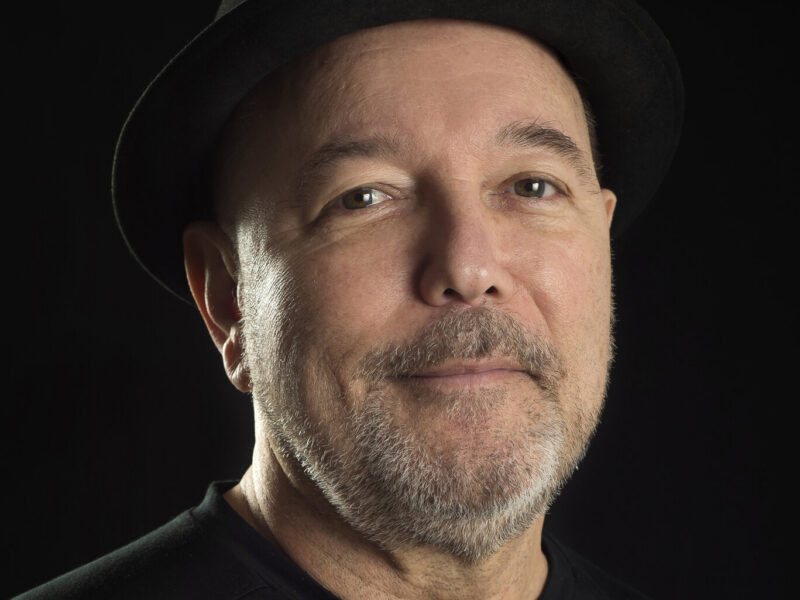

A Grammy-winning musician walked into a room full of social and behavior change professionals.
And somehow, it made perfect sense. Because change rarely happens through campaigns alone, but through the stories that make them human.
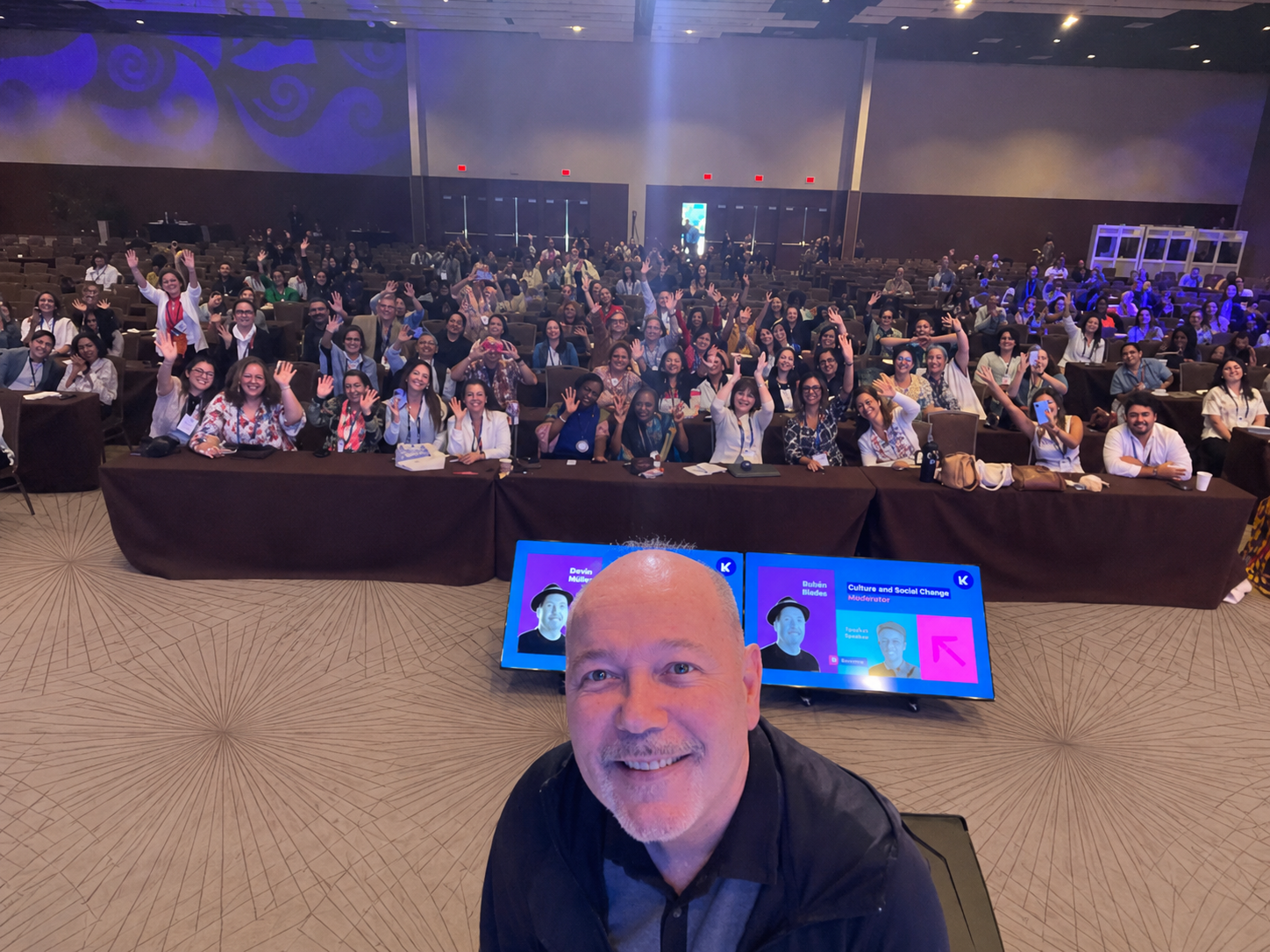
During the 2026 International Social and Behavior Change Communication (SBCC) Summit in Panama City last month, co-hosted by the Johns Hopkins Center for Communication Programs (CCP) and the Centre for Communication and Social Impact (CCSI), Panamanian singer, songwriter, actor, lawyer, and activist Rubén Blades joined NYU professor Carlos Chirinos for a conversation that challenged attendees to think differently about how change happens.
Chirinos framed the discussion around an idea familiar to SBCC practitioners: while the field has long relied on carefully planned, evidence-based interventions, it has paid less attention to the influence of artistic works that emerge organically through popular culture. Blades’ music, he suggested, demonstrates how songs and stories can shape social norms and values, not because they were designed as behavior change campaigns, but because they resonate with people’s lived experiences.
For decades, Blades has written songs that explore family, poverty, migration, dictatorship, corruption and identity. His music has sparked conversations across Latin America that no communication strategy could have designed. At the Summit, he reflected on why those stories continue to resonate, and what they can teach a field built on helping people change.
At the center of the conversation was Amor y Control, the deeply personal song Blades wrote after his mother was diagnosed with cancer. As he left the hospital one day, he witnessed another family in crisis. Rather than writing only about his own experience, he transformed a private moment of grief into something larger.
“My family’s pain became the pain of all families,” he said.
The song has endured for more than three decades because it is not only about loss. It is about love, resilience and the quiet solidarity that carries families through crisis.
For SBCC professionals, it was a reminder that communication does not always begin with a strategy. Sometimes it begins with recognition, with someone hearing their own life reflected back at them.
 Blades described himself not as a writer of messages or moral lessons, but as an observer. His songs, he said, are meant to reflect life, not instruct it.
That distinction ran through the conversation. Speaking in Spanish throughout the session, Blades emphasized that culture shapes how people understand themselves and each other. Stories, music and art create space for reflection in ways that data and directives often cannot.
He also called for what he described as a “school for unlearning,” a space where people could let go of harmful ideas about machismo, racism, sexism and homophobia that are often passed down across generations.
“We need schools not only to learn,” he said. “But to unlearn.”
He traced that idea back to his grandmother.
“We are not poor,” she told him. “We just don’t have money. Poor is the person who has nothing in their head and nothing in their soul.”
As the session ended, the audience rose for a standing ovation. Rubén Blades hadn’t sung a note.