
More than a decade after the West Africa Ebola outbreak – the largest and most severe Ebola outbreak ever recorded – Ebola is again making headlines. This time, it’s in the Democratic Republic of the Congo (DRC), where the current outbreak has been designated a public health concern by the World Health Organization.
Less than a month in, the outbreak is already the third largest on record.
Outbreaks like this are a reminder that communication is part of response efforts, not separate from them.
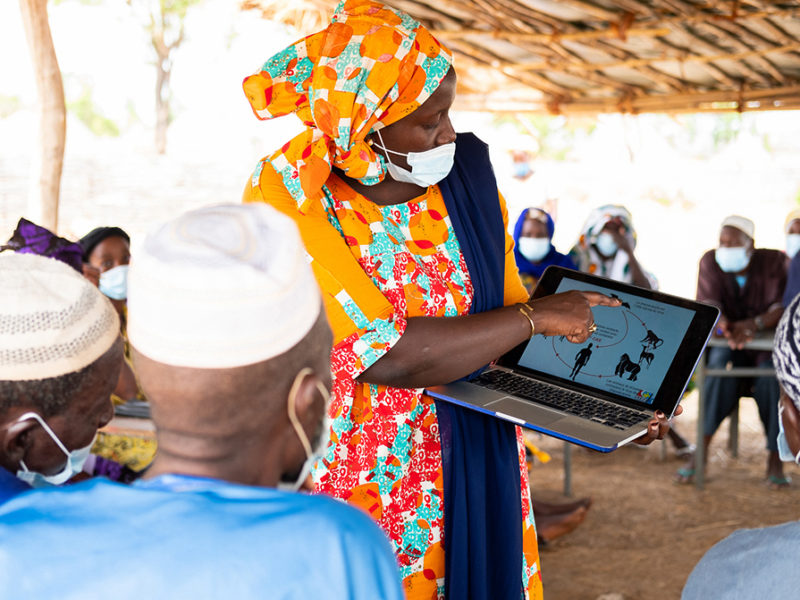
The Ebola Communication Network, originally created during the 2014–2016 West Africa Ebola epidemic, is being relaunched by the Johns Hopkins Center for Communication Programs (CCP). The free resource is intended to support health communicators, community leaders, health providers, response teams and journalists with access to trusted communication tools during a rapidly evolving situation.
As the current outbreak unfolds in DRC, the Ebola Communication Network is being updated to make existing resources available to those who may find them useful now. Most materials were developed during earlier outbreaks but continue to offer practical guidance for communicating with communities, patients, families and frontline health workers.
As part of the relaunch, CCP is asking colleagues, organizations, ministries of health, researchers and frontline communicators to share resources they are developing and using in response to the current outbreak. The goal is not only to provide access to past materials, but to surface and share new, practical guidance as it emerges.
Current reporting indicates that the outbreak remains geographically concentrated but is being closely monitored due to the potential for spread. Response efforts are underway, including surveillance, case investigation and contact tracing, but like previous Ebola outbreaks in the region, implementation is complicated by access challenges and the need to build and maintain community trust quickly. While case numbers remain far below those seen in the West Africa epidemic, Ebola is highly contagious and can escalate rapidly when transmission is not quickly identified and contained.
The International Rescue Committee (IRC) recently warned that the rapidly escalating DRC outbreak could become the deadliest outbreak on record without urgent international action.
During the West Africa outbreak, communication challenges often shaped the course of the response. Fear, misinformation, distrust, stigma, and confusion influenced how people understood Ebola and whether they followed public health guidance. In some settings, social and cultural practices unintentionally contributed to transmission, while mistrust of health authorities made response efforts more difficult.
“Communication is a critical component of outbreak response,” says Debora Freitas López, CCP’s executive director. “As the situation in DRC evolves, we hope the Ebola Communication Network can serve as a practical resource for communicators, health workers, journalists, and community leaders seeking evidence-based tools and guidance.”
At the same time, the context of the current outbreak is not identical to past outbreaks.
One important difference is the strain involved. This outbreak is associated with the Bundibugyo strain of Ebola, which is less commonly seen than the Zaire strain that has driven many of the more recent large outbreaks in the region. Much of the existing vaccine and treatment infrastructure has been developed around the Zaire strain, which means that while there is valuable experience to draw on, there may also be added complexity in how tools are applied and how quickly they can be deployed in this context.
This makes clear communication even more important, especially in helping explain what is known, what is still being learned, and how response strategies may evolve.
“Outbreaks move quickly,” says CCP’s Shannon McAfee, who has worked on Ebola before. “Communities need clear information they can understand and act on. Health workers need support for difficult conversations. And communicators need tools that reflect both evidence and realities on the ground.”