
Most women haven’t heard of a surgery that could sharply cut their risk of ovarian cancer.
That’s a missed opportunity, researchers say, because the evidence is clear: many ovarian cancers start in the fallopian tubes. Removing those tubes, a procedure called salpingectomy, can prevent a substantial number of cases. It also provides permanent contraception, and organizations such as the American College of Obstetricians and Gynecologists now recommend it in place of traditional tubal ligation for women seeking sterilization.
In some parts of the world, March is Ovarian Cancer Awareness Month, and advocates are using the moment to spotlight prevention, because once ovarian cancer is detected it is usually in late stages and very difficult to treat. Half of women diagnosed do not survive for five years.
Yet awareness of salpingectomy is low, among women and many non-OB/GYN health providers alike. So, a team at the Johns Hopkins Center for Communication Programs set out to learn how best to talk about it.
They started by listening. Working with the Johns Hopkins School of Medicine and with funding from Break Through Cancer in 2025, researchers used co-design workshops, surveys and interviews to hear directly from more than 150 people from across ages and racial groups, including patients, clinicians and community advocates. They wanted to know when women might be open to learning about ovarian cancer prevention – and how that message should be framed.
One big finding: most women are not actively seeking this information. “Women aren’t Googling salpingectomy,” said Erica Nybro, who led this work for CCP. “Many people assume that if they don’t have a family history, there’s nothing they can do to prevent ovarian cancer.”
The team mapped moments in a typical health-care journey where conversations about prevention could fit naturally: family-planning visits, Pap smears, mammograms, menopause care and other routine appointments.
They also learned that before talking about surgical options, many women need basics: a clear explanation of pelvic anatomy, reproduction, and how ovarian cancer develops.
The discussions uncovered deeper, more fraught issues. Women of color repeatedly raised the history of reproductive coercion and forced sterilization in the U.S., abuses that disproportionately harmed Black women, poor women and people with disabilities. That legacy shapes how some communities view recommendations about fertility or involving surgery.
“Those concerns came up again and again,” Nybro said. Participants wanted transparency, respect, and the ability to choose – not pressure.
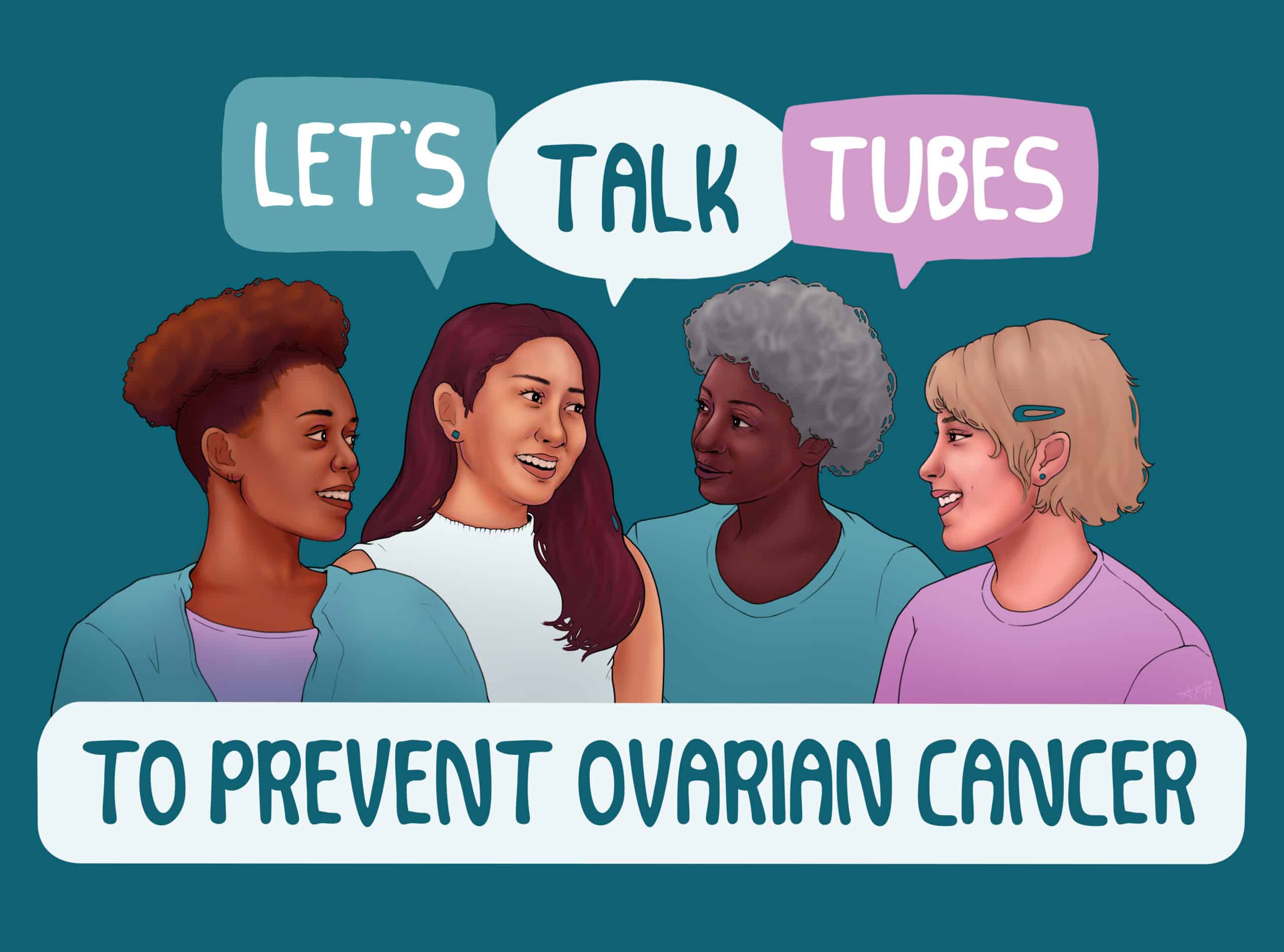
Another practical insight: decisions about reproductive health often happen outside the exam room. Many women said they’d first talk with friends, sisters or other trusted people before deciding. That led to the campaign’s working slogan: “Let’s Talk Tubes.” The phrase is meant to prompt everyday conversations as much as clinical ones.
“This slogan starts a conversation,” one tester said. It says, “I’m going to learn something.”
“We need word of mouth among women for this information to spread,” another said.
Materials now in development – educational resources, a planned website redesign, provider training and policy work to ease insurance barriers – draw directly from what women said they needed. The goal is to make ovarian cancer prevention a routine part of health conversations, so women hear about their options at moments that matter.
Scientific advances are only part of the solution, Nybro said. “You can have an incredible prevention opportunity. But if women don’t know about it – or don’t feel comfortable asking about it – then it won’t reach the people it could help.”